TDOT’s I-24 Southeast Choice Lanes plan flags potential property removals across South Nashville and Antioch
Updated planning documents expand focus on right-of-way impacts
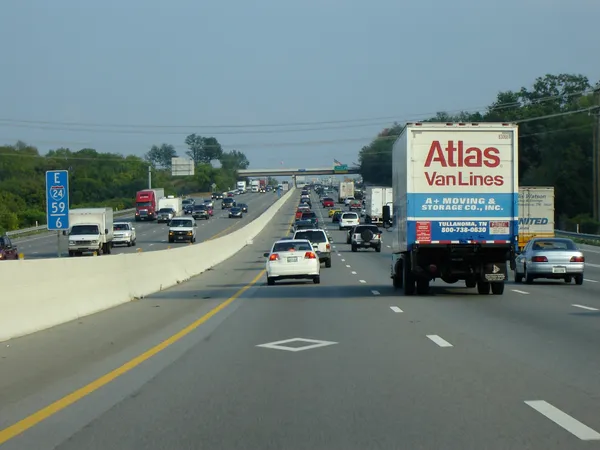
Tennessee transportation officials have advanced planning for the Interstate 24 Southeast Choice Lanes project, a proposal to add new, optional priced lanes along a heavily traveled corridor between downtown Nashville and the I-840 interchange in Rutherford County. Newly released maps and supporting materials outline properties that could be affected if the project proceeds as presented, raising concerns among residents and business owners in South Nashville communities and the Antioch area.
The project concept adds two new lanes in each direction while keeping existing general-purpose lanes available without charge. The added lanes would use congestion-based pricing intended to manage demand and maintain more reliable travel conditions, with a stated operational goal of keeping traffic flowing at or above roughly 45 miles per hour during peak periods.
Public hearings scheduled as environmental review milestones move forward
Three National Environmental Policy Act public hearings are scheduled for early March, with a formal presentation and opportunities for questions and public comment. The comment window is set to remain open through late March.
- March 3, 2026: Smyrna Event Center (Smyrna)
- March 4, 2026: Coleman Park Community Center (Nashville)
- March 5, 2026: Coleman Park Community Center (Nashville)
Transportation officials have described the maps as part of a conceptual design package used to identify potential impacts during environmental documentation. Under this approach, property impact lists can change as engineering refinements are made during final design and procurement.
Antioch businesses and neighborhood residents assess potential disruption
In recent days, attention has centered on the Antioch corridor near Hickory Hollow Parkway and Bell Road, where project mapping indicates that multiple commercial properties could be affected. Among those identified in public discussion is Pan-Asia Supermarket, an anchor business that opened in early February 2026 as part of a broader Chinatown-branded development initiative. Business representatives have said the possibility of a future removal was not understood at the time of opening and investment planning.
In nearby neighborhoods, residents have pointed to the prospect of expanded pavement, increased proximity to homes, and construction-related disruption. Project materials presented to the public also describe how lane additions could be designed to improve corridor operations and to support transit reliability by allowing buses to use the managed lanes.
How Choice Lanes differ from traditional toll roads
Choice Lanes are structured as optional lanes that can be priced dynamically based on traffic conditions. Drivers can remain in existing lanes without paying to travel the corridor. The project is also planned for delivery through a public-private partnership model, in which a private-sector partner would take on responsibilities that can include design, construction, financing, and long-term operations and maintenance under state oversight.
Key decision point ahead: public comments gathered in March are expected to inform refinements to the preferred alternative before right-of-way decisions are finalized.
With environmental and engineering steps converging, the upcoming hearings are positioned as a central opportunity for residents, business owners, and corridor users to evaluate maps, understand the timeline, and provide input on potential property and community impacts.