Photo archive traces Rev. Jesse Jackson’s pivotal Tennessee appearances from Memphis 1968 to later commemorations
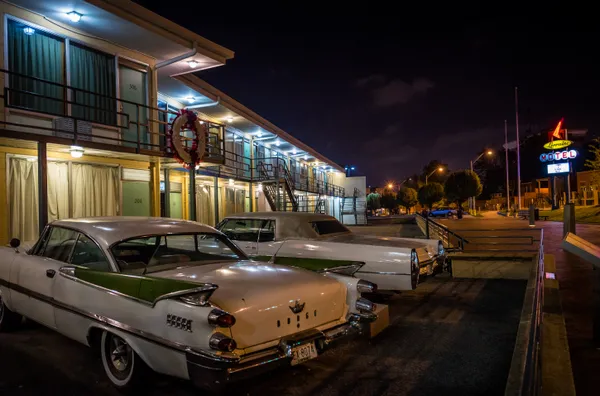
A Tennessee lens on a national civil rights career
A newly assembled photo record highlights how Tennessee repeatedly served as a stage for the Rev. Jesse L. Jackson’s public life—capturing moments tied to the civil rights era, political organizing, and later commemorations of movement history. The images center on appearances in Memphis, where Jackson’s proximity to the Rev. Martin Luther King Jr.’s final campaign placed him in the frame of events that reshaped American public life.
Across the photographs, Tennessee is presented not as a backdrop but as a recurring point of civic focus: a place where labor rights, racial justice, and public memory converged, and where Jackson returned over the years as both participant and witness.
Memphis, April 1968: a defining moment at the Lorraine Motel
One of the most historically resonant images shows King standing on the balcony of the Lorraine Motel in Memphis on April 3, 1968—one day before King was assassinated. Jackson appears alongside other senior figures of the Southern Christian Leadership Conference, documenting a moment that has become inseparable from the story of the Memphis sanitation strike and King’s final days.
The Lorraine Motel later became part of the National Civil Rights Museum complex, and Jackson’s return visits to the site in subsequent decades generated additional images that connect personal experience to public commemoration. Those later photographs underscore how anniversaries of King’s assassination have remained major civic events in Memphis, drawing movement veterans and national attention.
What the photos show about Jackson’s Tennessee role
Viewed together, the images trace a pattern in which Jackson’s Tennessee appearances fall into three broad categories: participation in major civil rights moments, engagement with institutions and communities during later organizing and speaking tours, and public remembrance at historic sites. The photo sequence documents shifts in the movement’s public presentation—from mass mobilization to institutional commemoration—while keeping Tennessee as a repeated touchpoint.
1960s movement documentation, including Memphis during King’s final campaign period.
Later return visits that situate civil rights history within museum and anniversary settings.
Public-facing appearances that reflect Jackson’s long-running focus on voting rights, economic opportunity, education, and health care.
Photography as record and evidence
Photo archives do more than illustrate; they verify presence, timing, and context. In this case, the Tennessee images provide fixed reference points across decades—linking a nationally known leader to specific dates and locations, and showing how the state’s cities, especially Memphis, remained central to the way civil rights history has been remembered and presented in public life.
The Tennessee photographs chart both the immediacy of 1968 and the long arc of commemoration that followed, capturing Jackson in moments where history was unfolding and where it was being publicly recalled.