Demolition begins on Oracle’s planned Nashville world headquarters campus, advancing long-awaited East Bank redevelopment
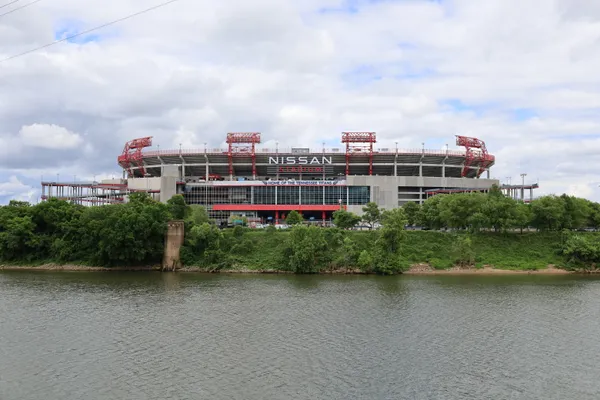
Site clearing marks a tangible step forward for a project central to Nashville’s East Bank plans
Demolition activity has begun on industrial buildings within the River North/East Bank area controlled by Oracle, signaling a shift from permitting and planning to physical preparation for the company’s proposed Nashville world headquarters campus. The work follows a series of demolition permits covering more than 500,000 square feet of existing structures across Oracle-assembled property.
Under Metro Nashville’s permitting framework, demolition authorizations are time-limited, creating a narrow window for work to start and be completed once permits are issued. The move represents one of the clearest on-the-ground indicators in years that Oracle’s riverfront development is progressing beyond concept imagery and zoning discussions, though it does not, by itself, establish a firm timeline for vertical construction.
What is being removed, and why it matters for the project timeline
The permitted demolition targets legacy warehouse and light-industrial buildings that remained on parcels acquired as part of Oracle’s East Bank land assembly. Site clearing typically precedes environmental abatement, utility coordination, grading, and foundation work. Early-stage perimeter controls commonly associated with pre-construction—such as site security and erosion-mitigation measures—have been associated with the transition into active preparation.
Oracle has not publicly set a definitive start date for major construction. However, demolition reduces uncertainty around site readiness, particularly in a district where infrastructure sequencing and environmental conditions can affect schedules.
Economic development commitments and public infrastructure components
The project’s local significance is tied not only to the scale of the campus but also to public infrastructure commitments embedded in prior city actions. In 2021, Metro advanced an economic impact framework that contemplated a major private investment and thousands of new jobs over a multi-year horizon, alongside substantial infrastructure work including utilities, roadway changes, and a planned pedestrian connection linking the area to surrounding neighborhoods.
Demolition is not a construction start date, but it is a prerequisite milestone that can compress later phases if subsequent approvals and financing remain aligned.
Design team, mixed-use elements, and adjacent development momentum
The planned campus has been positioned as a mixed-use development with office space and public-facing amenities along the Cumberland River. Oracle’s design roster has included internationally recognized architecture and engineering partners, alongside Nashville-based firms working on local execution.
Separate announcements tied to the broader campus concept have included a proposed Nobu Hotel and Restaurant as part of the East Bank development mix. Such components underscore that the campus is envisioned as more than a single-purpose office complex, with hospitality and retail uses expected to interact with nearby redevelopment—including the evolving stadium-adjacent district and other River North projects.
Key facts at a glance
- Demolition has begun on existing industrial structures within Oracle-controlled East Bank/River North property.
- Permits cover more than 500,000 square feet of buildings slated for removal.
- The campus has been framed as a major mixed-use riverfront headquarters development with significant infrastructure components.
- No public, definitive vertical-construction start date has been set alongside the demolition activity.
As demolition progresses, the next measurable signals for residents and businesses will be subsequent infrastructure work, environmental milestones, and any formal construction scheduling that follows site clearing.